 Bundle & Save
 Camping Chair
 Hammocks
 Tote Bag
 Cooler & Coffee Cup
 Beach Towel
 Hooded Towels
 Picnic Blankets
 Bags & Backpacks
 Cooler Backpack
 Outdoor Puffy Blankets
 Tarp, Bug Net & Accessories
Sustainable Camping: The Ethical Way to Set Up Camp & Hammock This Summer Holidays

Camping’s meant to feel good. Fresh air, slower mornings, salty hair, no notifications and coffee that somehow tastes better outside for reasons science still can’t explain. But it’s also easy to miss the mark without meaning to. Grass gets flattened, trees cop a beating, rubbish drifts through camp, and suddenly a beautiful spot looks a whole lot rougher than when everyone arrived.
That’s where sustainable camping comes in. It’s not a heavy, rule-laden way to camp, but more a way of thinking about how you set up, what you bring, and how you leave a place behind. A couple of smarter choices can make a big difference.
So consider this your (informal) guide to setting up camp this summer holidays in a way that’s easy, ethical and a little kinder to the places you love exploring. More good times, less impact. Let’s go!
Related read: Essentials for Camping in the Aussie Summer

What Does Sustainable Camping Actually Look Like?
Sustainable camping doesn’t require a rulebook. It really just comes down to a few practical choices:
-
Bring less stuff, but better stuff.
-
Use gear that lasts more than one season.
-
Set up without damaging trees, ground, or wildlife.
-
Use products that are biodegradable/eco-friendly.
-
Pack EVERYTHING out with you.
Camping this way means the campsite looks the same when you leave as it did when you arrived. That’s the goal.
Why Hammock Camping is Extra Sustainable
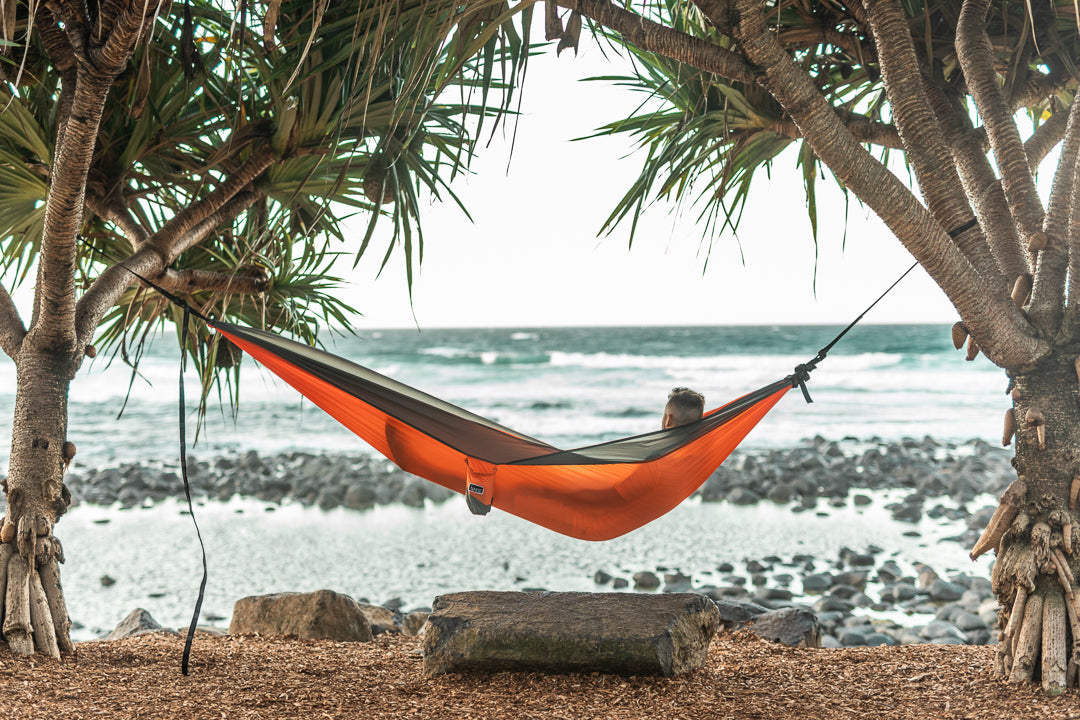
Hammock camping is one of the lowest-impact ways to sleep outdoors when it’s done right. Unlike tents, you’re not flattening grass, compacting soil or clearing space. You’re off the ground, your footprint stays small, and the environment underneath you stays intact.
It’s also extra sustainable because it changes how you pack for your trip. Hammock campers tend to bring fewer things and move more easily. Less setup means less of a pack down. It also typically means less clutter around camp.
That said, how you hang your hammock is important, so get your Notes app ready to take notes.

How to Hang a Hammock Without Damaging Trees
Trees do a lot of heavy lifting in hammock camping, so it’s worth treating them with the care and respect they deserve.
Wide, tree-friendly straps are essential. Thin ropes or cords cut into bark and damage the protective layer underneath. Nakie’s hammock straps spread the load evenly and help keep trees healthy.
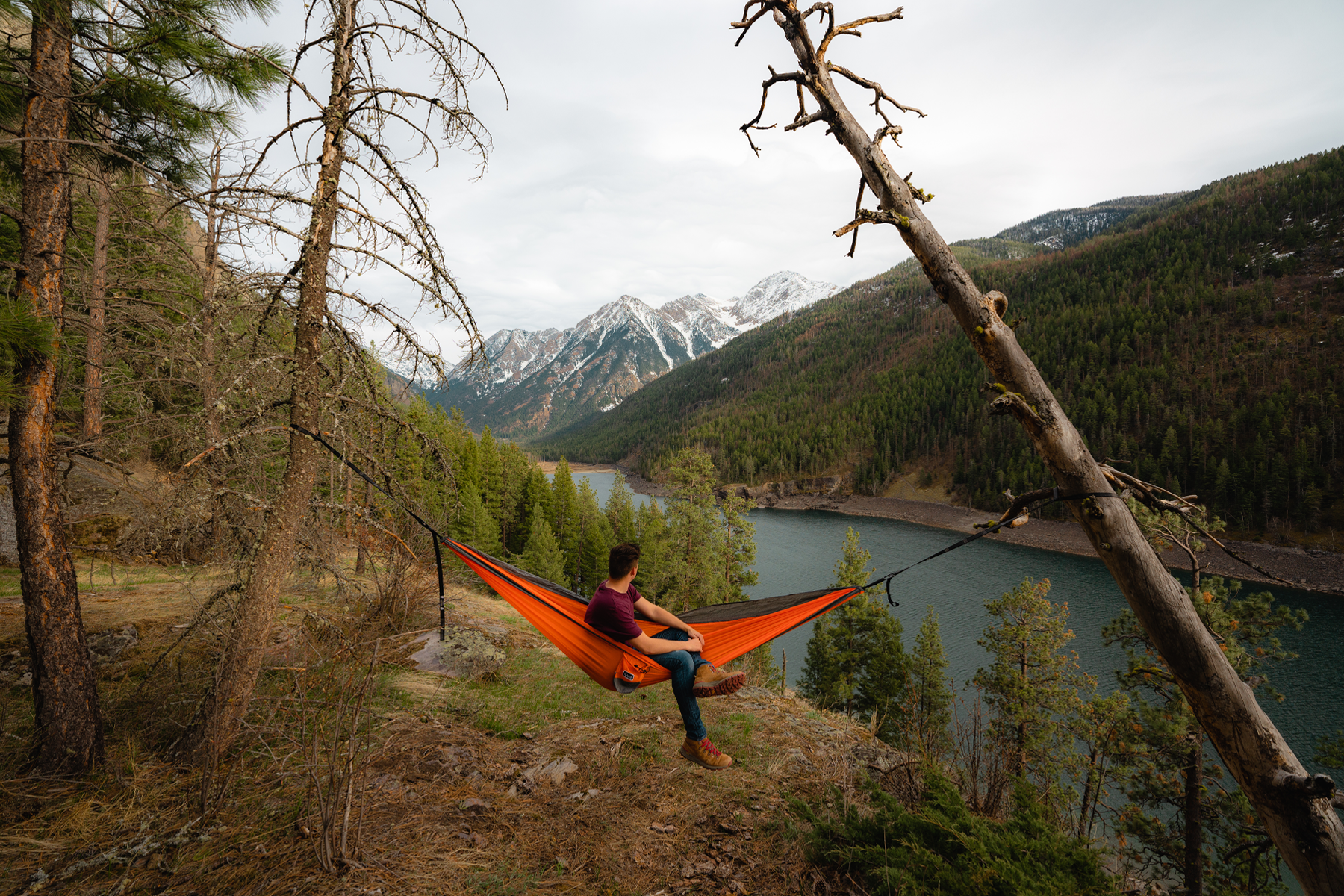
Try to choose sturdy trees that are at least 15 cm thick. Wrap your straps around head height and aim for a relaxed curve in the hammock, not a tight line pulled straight across. That curve is more comfortable and better for the tree.
If a spot feels wrong, move on! There’s almost always another pair of trees nearby.
How to Choose a Hammock That’s Built to Last
The most sustainable piece of gear is the one you don’t have to replace. A hammock that stretches, frays, or fails after one trip ends up costing more in the long run, both financially and environmentally.
Nakie’s recycled hammocks are made from plastic bottles turned into strong, breathable fabric. They’re triple stitched, rated to hold up to 225 kg, and designed for real use, not just a weekend photo op. Each one comes with no-knot straps and carabiners, so setup stays simple and tree-friendly.
Because they last, you’re not stuck in the cycle of buying, breaking, and replacing gear every summer.
Related read: The Best Hammocks for Camping in Australia

Other Sustainable Camping Gear That’s Worth Packing
Good camping gear should keep you comfortable and protected while you’re there, and leave absolutely no trace once you pack up and move on.
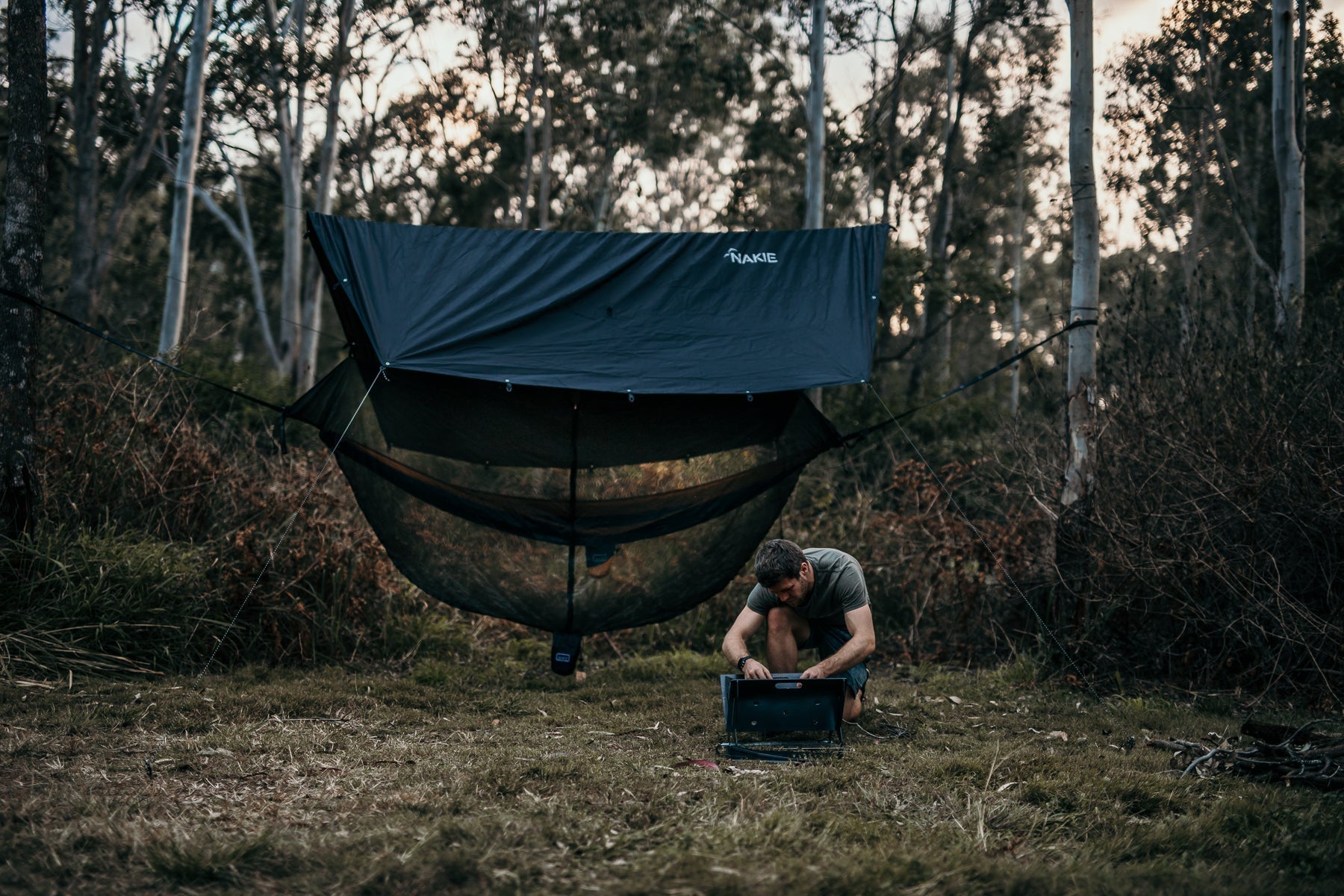
A rain tarp turns a hammock setup into an all-weather one. It blocks sudden summer downpours, morning dew, and harsh sun without needing poles or disturbing the ground. Nakie’s recycled rain tarp is waterproof, lightweight, and easy to set up, with a 3000 mm coating and heat-taped seams for proper protection.
Bug nets are just as important, especially near water. Nakie’s recycled bug net fits neatly over a hammock, keeps mozzies out, and still allows airflow on warm nights. It packs down small and weighs very little, which makes it easy to bring along even if you’re unsure you’ll need it.
A recycled picnic blanket gives you a clean place to sit without trampling grass or sand. Nakie’s is waterproof underneath, machine washable, and tough enough to handle repeated trips without falling apart.
Reusable water bottles, containers, and cutlery are also essentials, cutting down on single-use plastics that often escape campsites and end up everywhere they shouldn't.

Tips for Choosing a Campsite Thoughtfully
Where and how you set up camp can sometimes have more impact than the gear you bring with you.
-
Use established campsites whenever possible. They’re already designed to handle foot traffic, fires and repeated use. Setting up somewhere untouched might look tempting, but it’s often where the most damage happens.
-
Give water some space. Rivers, lakes and shorelines are fragile zones that wear down quickly. Camping a little further back protects vegetation, keeps water clean and usually means fewer bugs and better drainage for you.
-
Keep things tight and tidy. Set up only what you need and keep your gear close together. Resist the urge to spread out, move rocks or clear plants to make things feel more comfortable. Camp should fit the landscape, not bend it to suit you.
If you catch yourself thinking about “fixing” the site, that’s your cue to stop. The best campsite is the one that looks exactly the same after you pack up.
How to Camp and Leave No Trace
-
Take absolutely everything home with you, including food scraps, wrappers, bottle caps and those tiny bits of packaging that are easy to miss, because if it came with you, it should leave with you too.
-
Bring a dedicated rubbish bag from the start so waste stays contained and doesn’t end up blowing through camp or being wedged under a log for someone else to deal with later.
-
Stick to established tracks and campsites whenever possible, as creating new paths or clearings might feel harmless in the moment but causes long-term damage to vegetation and soil.
-
Keep all washing, cleaning and dishwasher well away from rivers, lakes and the ocean, and use biodegradable soap sparingly so waterways stay clean for wildlife and the next campers through.
-
Leave rocks, logs and plants exactly where you found them, even if moving one seems helpful at the time, because small changes add up quickly in natural environments.
-
Store food properly and keep camps tidy so wildlife isn’t attracted to your setup, as feeding animals, even by accident, can seriously disrupt their natural behaviour.
-
Keep noise and light levels low, especially after dark, using headlamps instead of floodlights and remembering that sound travels much further outdoors than you think.
-
Before you leave, do a slow final walk around your campsite, checking under bushes, around trees and where you sat or cooked, so the area looks completely untouched once you’re gone.
Camp Light, Hang Thoughtfully
Once you start camping sustainably, you’ll truly never stop. It’s an absolute game-changer – both for you and the environment. Sustainable camping means fewer things to carry, which means setting up faster and packing down without the usual chaos at the end of the trip. Quality gear does what it’s supposed to, which means fewer broken clips, snapped cords or late-night fixes when you’d rather be sitting back watching the sky.
Thoughtful setups also mean campsites stay cleaner, wildlife stays at a distance, and everyone gets to enjoy the place without stepping around someone else’s mess.
Choosing durable, recycled gear like Nakie’s range supports a more circular way of camping. You buy it once, use it for years and stop feeding the cycle of cheap gear that ends up in landfill after a handful of trips. Less replacing, less waste, more time doing what you actually came for, which is getting outside and enjoying it.

Sustainable Camping FAQs
Is hammock camping actually better for the environment?
When it’s done properly, yep! Hammocks keep you off the ground, which means less damage to grass, soil and plants. Pair them with wide, tree-friendly straps and you’re camping with a much lighter footprint.
Can I still camp comfortably without a tent if the weather turns?
Absolutely. A rain tarp handles sudden showers and harsh sun, while a bug net keeps mozzies out without blocking airflow. Together, they make a hammock setup surprisingly versatile.
How do I keep rubbish under control while camping?
Plan ahead and keep it simple. Bring reusable containers, avoid over-packaged food, and always have a rubbish bag on hand. If it comes in with you, it goes out with you.
Does recycled camping gear actually last?
Good recycled gear does. Outdoor fabrics made from recycled materials are designed to handle sun, salt and repeated use. The key is buying well-made pieces you’ll use for years, not one trip.
Where shouldn’t I set up camp?
Avoid riverbanks, dunes and areas with fragile vegetation. Stick to established campsites or durable ground whenever possible so the landscape gets a chance to recover.
Is sustainable camping harder than regular camping?
Not really. It usually means packing a bit smarter and being more aware of where you set up. In practice, it often feels easier. Less gear, less mess, less to clean up later.