 Bundle & Save
 Camping Chair
 Hammocks
 Tote Bag
 Cooler & Coffee Cup
 Beach Towel
 Hooded Towels
 Picnic Blankets
 Bags & Backpacks
 Cooler Backpack
 Outdoor Puffy Blankets
 Tarp, Bug Net & Accessories

Hammock vs Tent for Weekend Camping Trips (Which is Best?)

Every seasoned camper has had this conversation. It usually happens about three days before a weekend trip, when one person in the group chat sends a photo of a hammock strung between two perfect trees, captioned something like "we should do this instead." And suddenly, everyone is questioning everything.
Look, tents have been the default for so long that most of us never really stop to ask whether they're actually the best option… or just the one we're used to. So let's settle it.
Here's the real deal on hammock camping vs tent camping for weekend trips: what each one does well, where each one falls short, and how to figure out which setup is right for you.
The Case for a Camping Hammock
Let's start with the obvious: there is something so very satisfying about arriving at a campsite, walking past the people wrestling with tent poles, and having your whole shelter set up in under a minute.
A quality camping hammock (like Nakie’s recycled hammock) weighs just 600g and packs down to the size of a water bottle. That's it. That's your bed. If you've ever hiked in with a tent on your back and spent half the trip resenting every gram of it, the appeal becomes very clear very quickly.
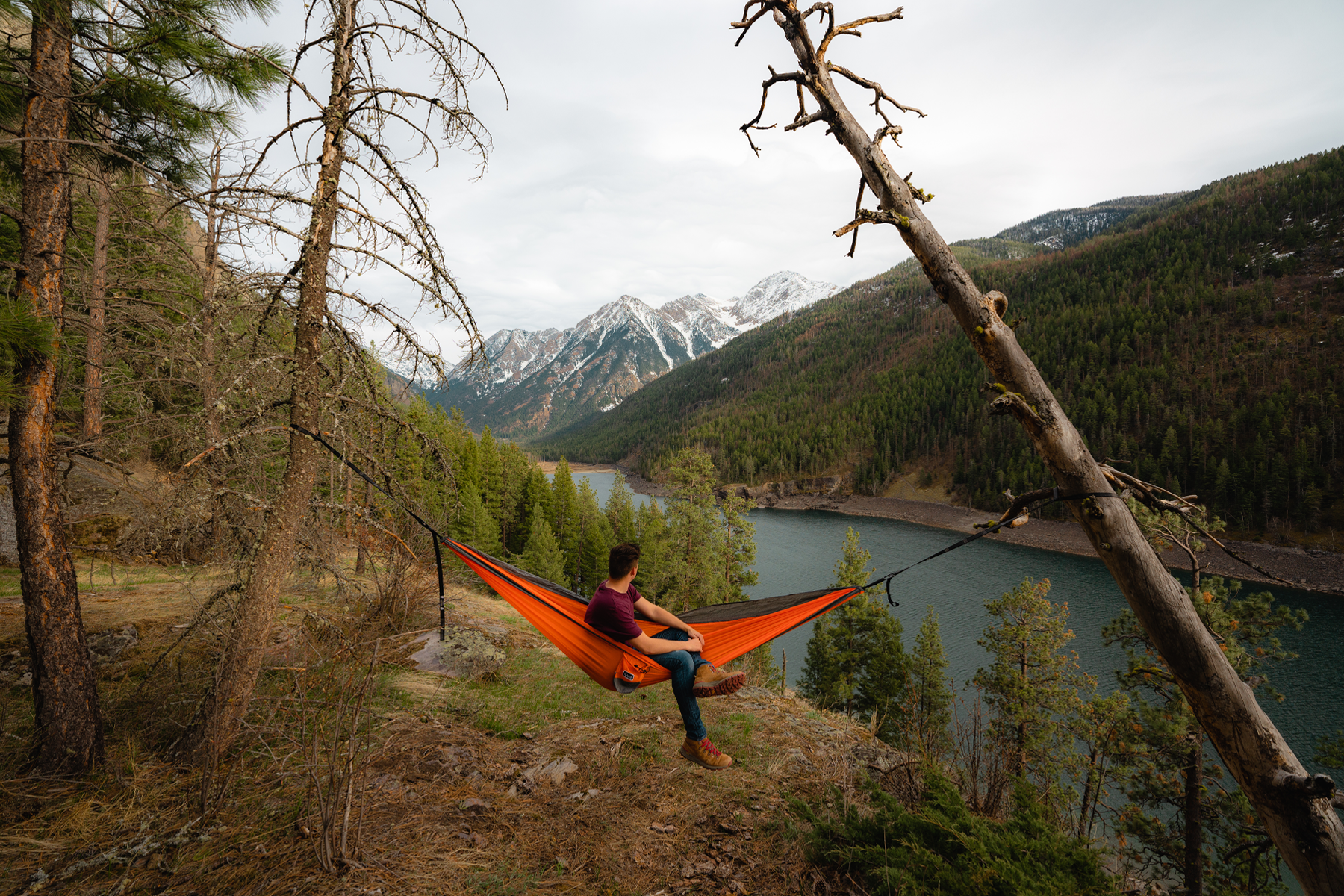
The other big advantage? You're sleeping off the ground, so no rocks, no roots, and definitely no rogue stick situation at 2am. Plus, the gentle sway of a hammock is more comfortable for a lot of people (there's a reason hammock camping has developed such a devoted following among backpackers and weekend adventurers alike).
Hammocks are also significantly faster to set up and pack down than tents. The Nakie hammock, for example, uses a no-knot strap system: you just wrap, tuck, clip, and you’re done. There are no poles to align, no pegs to lose in the dark, and no fly to stuff back into its too-small bag.
Read more: The best camping gear for when you want to travel light

Hammock camping is best when:
-
You're moving between sites or hiking to your spot
-
The campsite has suitable trees (2.5m–4.5m apart)
-
Weight and pack size are a priority
-
You run warm and struggle to sleep comfortably on the ground
-
You want the least amount of gear to manage
The Case for a Camping Tent
Let's be honest here too: tents have their place, and it would be a disservice to pretend otherwise.
The most significant advantage of tent camping is that it works anywhere. Rocky ground, open fields, sandy beach – it doesn't matter. You don't need trees, poles, or any specific environmental conditions.
Tents also provide more complete weather protection. A good four-season tent will keep you dry in sideways rain, windproof in a southerly, and a lot warmer than most hammock setups in very cold conditions.
And if you're camping with family, a tent can often be more practical.
Tent camping might be better if:
-
You're camping in open or treeless areas
-
Cold weather is a factor
-
You're travelling with kids or a larger group
-
You need to store gear inside your shelter
-
Weather conditions are severe
The Cost Comparison
A decent tent (one that'll keep you dry and last more than a season) is going to set you back anywhere from $150 to $400+. Add a sleeping mat (because you'll need one), pegs, a footprint if the ground is rough, and pretty quickly you're well into the $300–$600 range before you've spent a night in it.
Nakie’s hammocks come in at a fraction of that ($129.95), including the straps and carabiners, and have a lifetime warranty — so it really is a one-time purchase. The full hammock + tarp + bug net combo ($276.68) covers you for three-season camping and still lands well below the price of a quality tent set-up alone.
The one cost caveat: if you're camping regularly in cold weather, you'll eventually want some kind of insulation layer for insulation from below, which adds to the total. Our outdoor puffy blankets ($149.95) are water-resistant, silky soft and rated to 5 degrees Celsius, so they are a great add-on.
But for three-season Australian camping – which covers the vast majority of weekend trips – the hammock setup is the more affordable way in.
The Side-by-Side Comparison
Rather than declaring a winner (because it really depends), here's how the two stack up for a weekend trip:
Weight and packability: Hammock wins, decisively. A full hammock setup with rain tarp and bug net from Nakie comes in well under 2kg combined. Most decent tents start at double that before you've added a sleeping mat.
Setup time: Hammock wins again. Two minutes with a bit of practice. Tents can take significantly longer, especially in the dark or in the wind.
Comfort on the ground: Tent wins – mostly because sleeping on the ground is a known quantity. Hammock sleeping takes a little getting used to, particularly if you're a side sleeper. The fix is going diagonal in the hammock, but it can take some time to adjust.
Weather versatility: Tent wins in extreme conditions. A 3m x 3m rain tarp handles light-to-moderate rain well, but a tent has the structural edge in genuinely rough weather.
Location flexibility: Tent wins outright. Hammocks need trees or sturdy poles. If you're camping somewhere treeless – beach, alpine plateau, open scrubland – you'll need a hammock stand or a different shelter.
Environmental impact: Used correctly, hammocks are gentler on campsites. That’s because there’s no ground disturbance, no pegs pulling up grass, and no compacted soil under a tent footprint. Plus, the Nakie recycled hammock is made from 37 recycled plastic bottles and comes with wide tree-friendly straps, so you're not cutting into bark either.

Can You Actually Sleep in a Hammock for a Full Weekend?
Yep! And plenty of people do it for weeks at a time on long trails. But there are a few things worth knowing before your first overnight.
Insulation from below is the main thing to sort. Because your sleeping bag gets compressed underneath you, you lose insulation where you need it most. A puffy blanket solves this completely, but a warm jacket stuffed under your lower back and legs will get you through a mild night.
Temperature is the real variable. If it's a warm Australian summer night and you're camping somewhere like the Grampians or the Blue Mountains in late spring, a hammock with a light blanket is dreamy. If it's pushing towards single digits overnight, you need to plan around that.
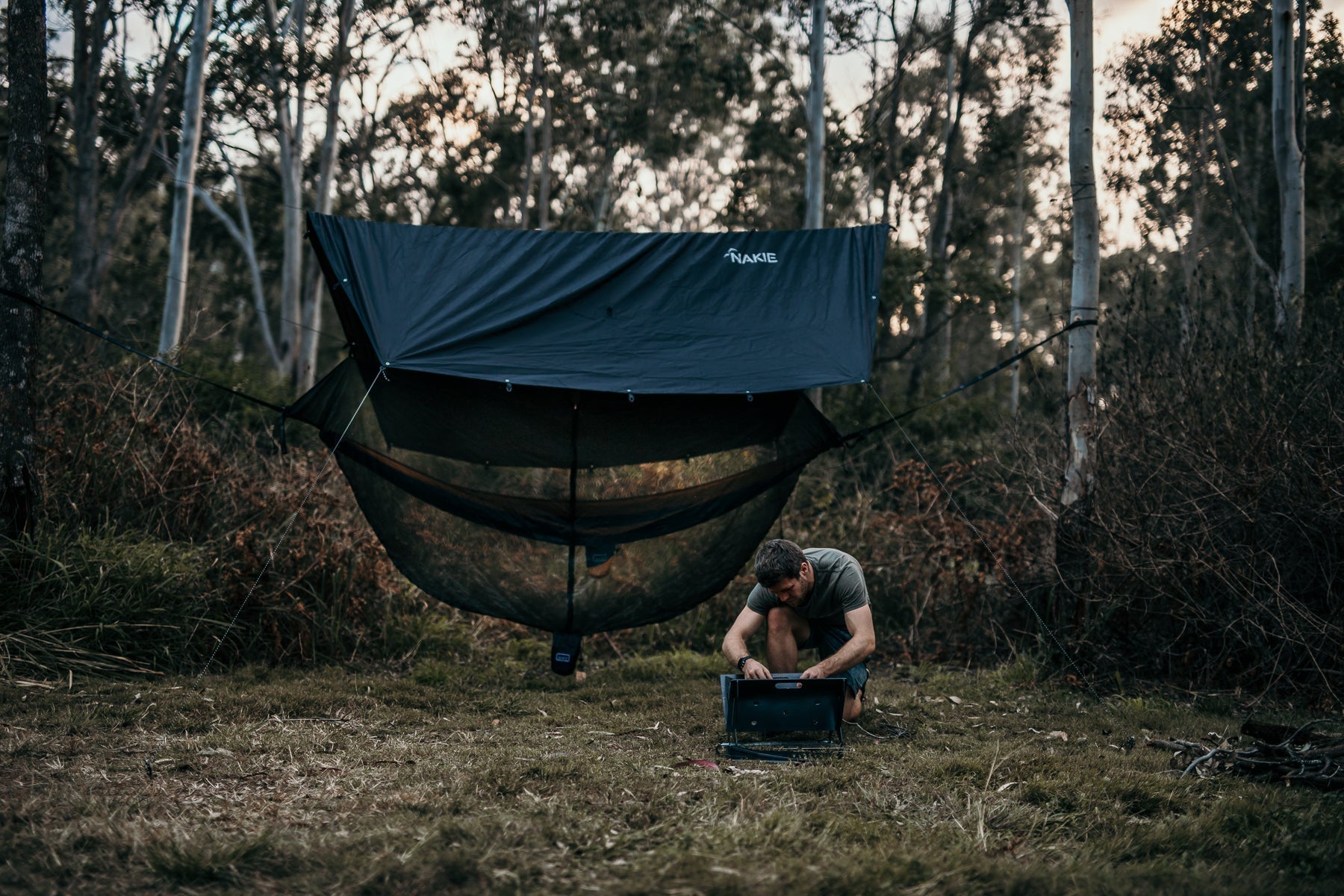
The Nakie hammock, tarp and bug net combo is a full setup for three-season camping:
-
Made from about 25 recycled plastic bottles turned into polyester micro-mesh, the bug net weighs just 410 grams and keeps the mozzies out.
-
The 3000mm PU-coated waterproof tarp handles rain.
-
The hammock itself is a double (3m x 1.8m, rated to 225kg) so it's not a tight squeeze.

Should You Pack a Hammock & Tent for a Weekend Camping Trip?
If you have the space and aren’t hiking too far from the car to the campsite, then why the heck not?
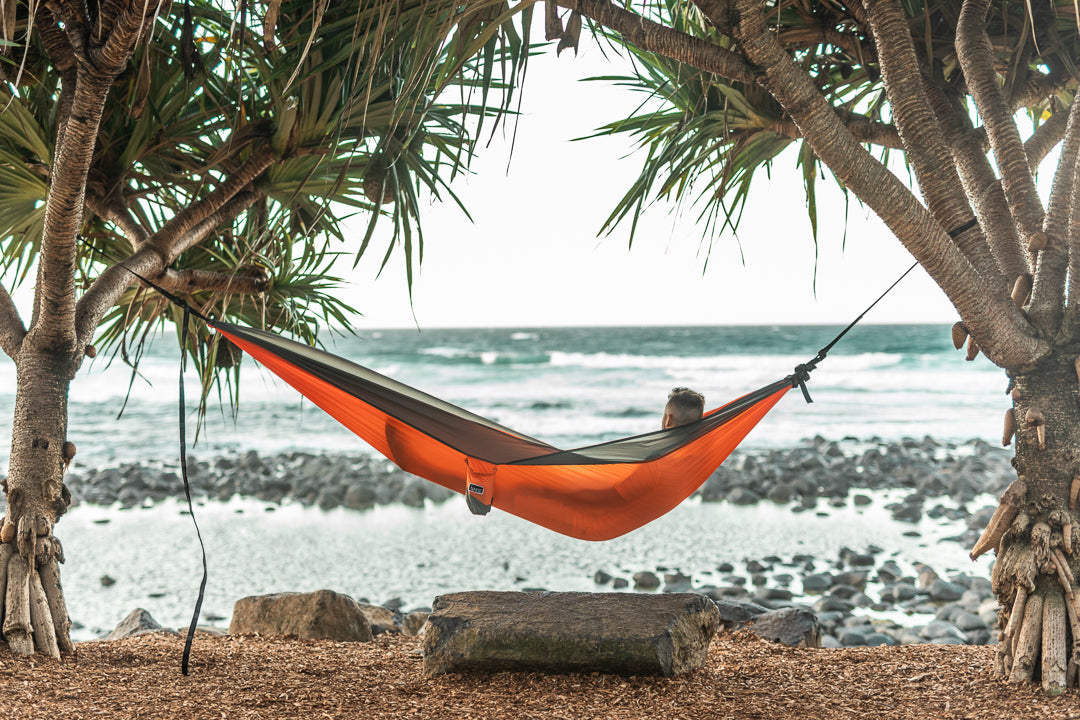
A hammock strung up near your campsite while you cook, read, hang out between activities, or watch the fire die down is an excellent piece of kit. It's also one of the easiest ways to convince someone who's never tried hammock camping to give it a go – you're not asking them to commit to sleeping in one, just to lie in it for twenty minutes while dinner cooks.
If you're camping in a group and only one or two people are up for the hammock sleeping experiment, everyone else keeps their tent.
The Nakie couple's combo (two hammocks, two sets of straps) is particularly good for this situation – you've both got your own space, and you can cover different territory on the campsite.
The Verdict
If you're heading out for a weekend trip with suitable trees, mild conditions, and a preference for travelling light, a hammock is the better option. Less to carry, faster to set up, more comfortable sleep, and – let's be real – a much better view of the stars.
If you're camping somewhere treeless, dealing with cold weather, or travelling with kids, stick with the tent (or bring both).
Either way, start with the Nakie recycled hammock – it weighs 600g, sets up in under a minute, and will outlast just about anything else in your gear bag (plus it has a lifetime warranty). Win-win!

FAQs
Is hammock camping harder than tent camping?
Not really – it's just different. Setup is faster with a hammock once you've done it a couple of times. The learning curve is mostly around getting comfortable with sleeping in a diagonal position and managing your insulation from below. Most people figure it out by the second night.
Do I need a bug net for a camping hammock in Australia?
In most Australian camping spots, yes. Mozzies and midges can be a problem in warmer months, and once you're in your hammock, you don't really want to be relocating. The Nakie bug net is a good solution to this problem, though!
Can I use a hammock without trees?
You need two solid anchor points roughly 2.5–4.5 metres apart. Trees are the obvious choice, but sturdy fence posts, car roof racks in a pinch, or a hammock stand if you're camping somewhere completely open will all work. If you're regularly camping in treeless spots, a tent is probably the more practical base setup.
Read our blog on how to hang a hammock anywhere if you’re stuck!
Will a hammock damage the trees?
Not if you're using the right straps. The Nakie hammock comes with wide polyester straps designed to spread the load across the bark without cutting in. Thin ropes and cord are what damage trees – wide straps are the standard recommendation for leave-no-trace hammock camping.
How do I know if a hammock is the right choice for my camping trip?
Ask yourself three things: Are there trees at the campsite? What's the overnight temperature? How far am I carrying my gear? If you've got trees, mild temps (above 10°C), and any kind of walk-in, a hammock is the right choice. If you've got a big hike from the car to the campsite, or setting up in an open field in winter, pack the tent.